


How to Plan a Winning Digital Marketing Strategy for 2025 : Step-by-Step Guide
For the Professionals | Read The Story Line (Not Boring)
In today's digital world, planning a successful digital marketing strategy isn't just about knowing the basics. It's about adapting to the ever-changing landscape, reaching the right people, and ensuring that every effort is purposeful and results-driven. Whether you're a small business owner or a marketer, understanding how to craft a strategy that drives results is crucial. Let's dive into this journey of building a robust digital marketing strategy that works for you in 2025.
Why is Digital Marketing Strategy Important?
Before we dive into the steps of creating a digital marketing strategy, let's take a moment to understand why it's so crucial. Digital marketing isn’t just about running ads or posting content. It's about connecting with your audience, solving their problems, and creating meaningful relationships. Without a solid strategy, your efforts may lack direction, leading to wasted resources.
In 2025, the digital marketing world will continue to evolve with new platforms, tools, and techniques. Therefore, having a well-thought-out strategy will keep you ahead of the curve.
Step 1: Define Your Business Goals and Objectives
The first step in planning any successful digital marketing strategy is to understand your business goals and objectives. These will serve as the foundation of your strategy and help you focus your efforts.
Example: Let’s say you're a local bakery in 2025. Your business goal might be to increase online orders or grow your social media following by 20% in the next 6 months. Whatever your goal is, it should be specific, measurable, achievable, relevant, and time-bound (SMART).
Actionable Idea: Ask yourself, "What do I want to achieve with my digital marketing efforts?" Your goal could be to:
- Increase website traffic
- Improve conversion rates
- Enhance brand awareness
- Drive more leads or sales
Once you have clear goals, you can move to the next step of your strategy.
Step 2: Understand Your Audience
Knowing your audience is the cornerstone of any successful marketing strategy. In 2025, with changing consumer behaviors and preferences, understanding who you're talking to is more important than ever.
Example: If you’re the bakery mentioned earlier, your target audience could include local foodies, health-conscious individuals, or busy professionals looking for quick meal options. Each of these groups may have different needs and preferences, which means you should tailor your marketing messages accordingly.
Actionable Idea: Create buyer personas — detailed profiles that represent your ideal customers. Consider the following factors:
- Demographics: Age, gender, income, location
- Psychographics: Interests, values, lifestyle
- Challenges and Pain Points: What problems does your product or service solve for them?
Bonus Tip: Use tools like Google Analytics, Facebook Insights, and surveys to gather data about your audience’s behavior and preferences.
Step 3: Conduct a Competitive Analysis
In 2025, competition will be fierce in every industry. To stand out, it's essential to understand what your competitors are doing and how you can do it better.
Example: For our bakery, it’s crucial to know what other local bakeries are doing online. Are they active on Instagram? Do they offer delivery options through a mobile app? Are they running special promotions for holidays?
Actionable Idea: Perform a competitive analysis by looking at:
- Their website and social media presence
- Their customer reviews and feedback
- Their paid advertising efforts (e.g., Google Ads, Facebook Ads)
- Their content marketing strategies (e.g., blogs, videos)
By understanding what your competitors are doing, you can find gaps and opportunities to differentiate yourself.
Step 4: Choose the Right Digital Marketing Channels
There’s a wide variety of digital marketing channels to choose from in 2025. Picking the right ones depends on where your target audience spends their time and what kind of content resonates with them.
Example: If your bakery targets busy professionals, Instagram and Google Ads might be effective. If your audience is more health-conscious, consider creating a blog or podcast about healthy eating.
Actionable Idea: Here are the most effective digital marketing channels in 2025:
- Social Media Marketing: Instagram, Facebook, TikTok
- Search Engine Optimization (SEO): Improve your website’s visibility on Google
- Pay-Per-Click Advertising (PPC): Google Ads, Facebook Ads
- Email Marketing: Personalized, targeted emails to nurture relationships
- Content Marketing: Blogs, videos, podcasts, and infographics
Choose the channels that will give you the best return on investment (ROI) and match your goals.
Step 5: Develop a Content Strategy
Content is at the heart of most digital marketing efforts. It’s how you engage with your audience, build trust, and provide value.
Example: If you're running a bakery, your content could include recipes, customer testimonials, behind-the-scenes looks at your baking process, and seasonal offers.
Actionable Idea: Here’s a step-by-step content strategy for 2025:
-
Content Creation: Develop content that is educational, entertaining, or helpful. For instance, create a blog post titled "5 Quick Breakfast Ideas Using Freshly Baked Bread."
-
Content Distribution: Share your content across social media, email newsletters, and your website.
-
Content Promotion: Promote content via paid ads or partnerships with influencers to boost visibility.
-
Measure Success: Track performance using tools like Google Analytics or social media insights.
Bonus Tip: Use content that’s SEO-optimized to increase organic traffic. Make sure your content answers common questions and solves your audience's problems.
Step 6: Set a Budget
A clear budget ensures that you don’t overspend on digital marketing efforts while still achieving your goals.
Example: If you have a small budget, you might want to focus on SEO and social media. If you have a larger budget, you can invest in PPC campaigns and content production.
Actionable Idea: Break your budget into the following categories:
- Content creation (blog, video, etc.)
- Paid advertising (Google Ads, social media ads)
- Tools and software (SEO tools, email marketing platforms)
- Influencer marketing (if applicable)
Bonus Tip: Always track the ROI of each channel to ensure that your budget is being spent effectively.
Step 7: Implement, Monitor, and Optimize
Now that you’ve developed your digital marketing strategy, it’s time to implement it. However, execution isn’t a one-and-done deal. You’ll need to continuously monitor your efforts and optimize them to improve performance.
Example: If your bakery’s Instagram engagement is low, consider changing your content approach or running ads to boost visibility.
Actionable Idea: Use tools like Google Analytics or Facebook Insights to track metrics such as:
- Website traffic
- Conversion rates (sales, sign-ups, etc.)
- Engagement on social media
- Return on ad spend (ROAS)
Based on these insights, make adjustments to your strategy. A successful digital marketing strategy requires ongoing refinement.
FAQs
Q1: What are the key steps to building a digital marketing strategy? The key steps include defining your business goals, understanding your audience, conducting competitive analysis, choosing the right channels, creating quality content, setting a budget, and monitoring your results for optimization.
Q2: How do I measure the success of my digital marketing strategy? You can measure success by tracking metrics such as website traffic, conversion rates, customer engagement, and return on investment (ROI) through tools like Google Analytics and social media insights.
Q3: How often should I adjust my digital marketing strategy? Digital marketing strategies should be adjusted regularly based on performance. Regular monitoring (weekly or monthly) helps identify opportunities for improvement.
Summary : Stay Ahead in 2025
Planning a successful digital marketing strategy is a continuous process. By following the steps outlined in this guide, you can create a digital marketing plan that helps you achieve your goals in 2025 and beyond. Always focus on providing value, staying connected with your audience, and adapting to changes in the digital landscape. With patience and persistence, you'll see measurable success!
Reputable Sources:
- Google Analytics
- HubSpot’s Guide to Digital Marketing
- Moz’s SEO Guide
- Content Marketing (Coming soon)
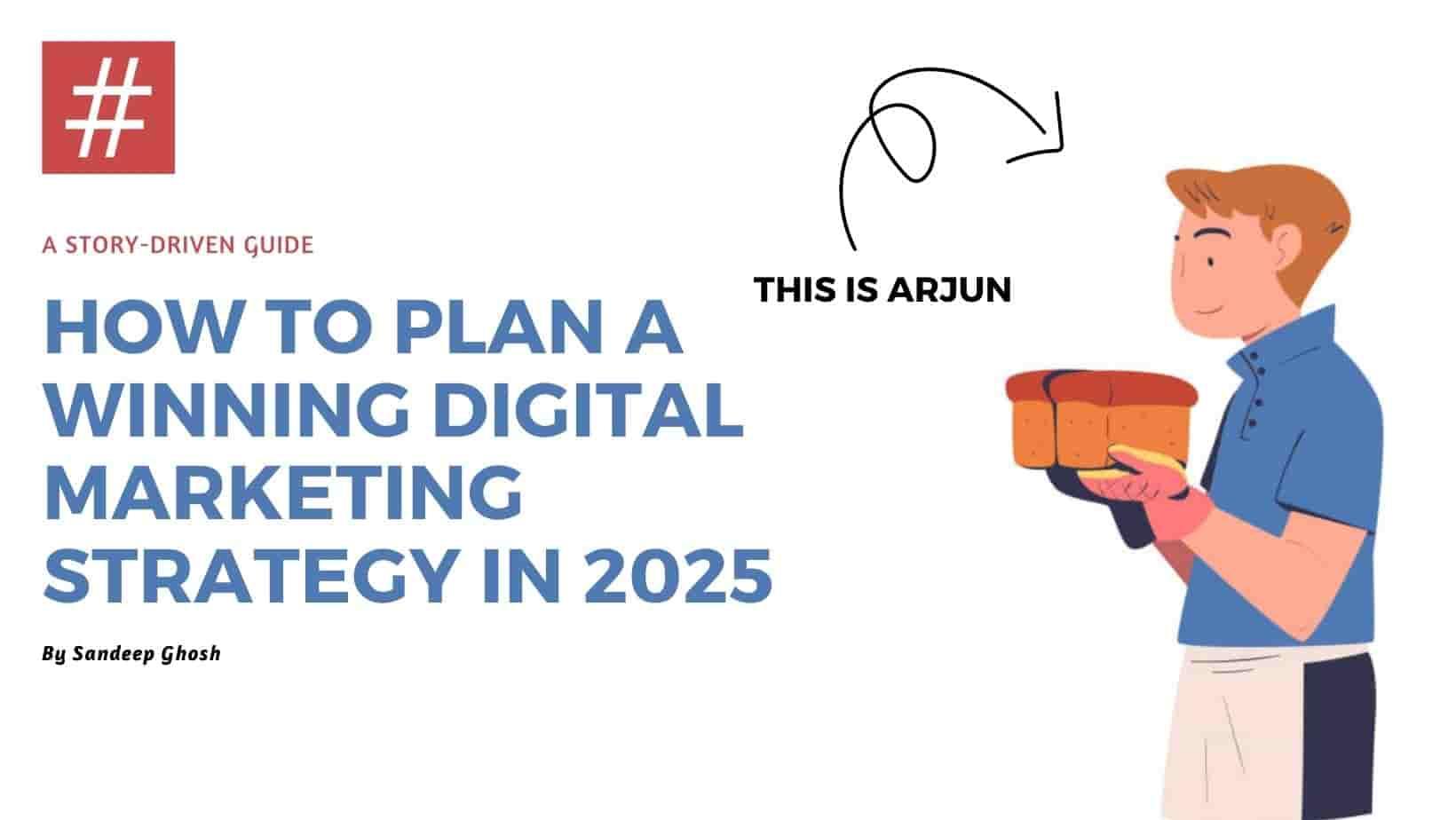
Arjun Story
How to Plan a Digital Marketing Strategy: A Story for 2025
It was a chilly morning in 2025, and Arjun, a small business owner, was sitting at his desk, staring at his computer screen. He had a dream—a dream of growing his small bakery into a local sensation, a place where people could count on freshly baked, delicious bread and pastries, delivered straight to their homes. But, like many business owners, he felt overwhelmed by the fast-moving world of digital marketing. The online world seemed like a jungle—social media platforms, Google Ads, blogs, videos... where should he even begin?
"How do I plan my digital marketing strategy?" Arjun thought, feeling a little lost. But as he took a deep breath and thought about his bakery, he realized that this was his chance. This was the moment to build a plan that would take his bakery to the next level. He knew he couldn’t do it alone. He needed help—and that's where this guide comes in.
Step 1: Clarifying His Dream – Setting Business Goals
Arjun sat back and asked himself, "What do I truly want for my bakery in 2025?" It wasn’t just about selling more bread—it was about building a community. He wanted to see his bakery's name pop up in local conversations. He wanted his customers to feel connected to his bakery, like they were part of the family. And he wanted them to place orders online without hesitation.
His first step was clear—he needed to define his business goals. He wanted to:
- Increase online orders by 25% in the next 6 months
- Grow his Instagram following to 5,000 engaged followers
- Launch a blog and share recipes to connect with food lovers
By setting these clear, specific goals, Arjun felt more confident. He wasn’t just wandering; he had a direction.
Step 2: Getting to Know His Neighbors – Understanding the Audience
The next morning, Arjun decided to head out to his bakery and sit down with a few regulars. He asked them simple questions—"What do you love about our bread?" "What would make you order more often?" "What’s your biggest challenge when buying bread online?"
From these conversations, Arjun learned that many of his customers were busy professionals who didn’t have time to go to the store. They wanted fast, easy delivery and loved supporting local businesses.
He also realized that people cared about quality, fresh ingredients, and knowing the story behind their food.
Arjun knew he had to understand his audience even better. So, he crafted a few buyer personas—imaginary but very real profiles of his typical customers.
For example, one of his personas was “Sarah,” a 35-year-old working mom, always on the go, who would love to order breakfast from his bakery but needed convenience.
With these personas, Arjun now knew exactly who he was talking to and what they needed.
Step 3: Looking Around – Understanding the Competition
Arjun had heard about other bakeries that were doing well online, but he didn’t know exactly what they were doing. So, he decided to do a little detective work. He visited their websites and social media profiles.
He saw one bakery running Instagram ads with stunning photos of their cakes and pastries. Another bakery had a blog filled with delicious recipes and tips. A third bakery was offering free delivery on all online orders, something Arjun hadn’t considered yet.
Arjun learned from this, but instead of feeling discouraged, he felt inspired. He realized there was room for his bakery to stand out by combining quality content, community involvement, and convenient services that the other bakeries weren’t offering.
He now knew exactly where his competitors were and how he could offer something different, something his customers would love.
Step 4: Choosing the Right Path – Picking the Best Digital Marketing Channels
Now, Arjun needed to decide which digital marketing channels would work best for his bakery. He knew his customers loved social media, especially Instagram and Facebook. But was it enough to just post pretty pictures of bread? Or should he try something more interactive?
He also knew that people searched for recipes and food tips online. So, creating a blog could help him connect with potential customers who might not even know his bakery existed yet.
Arjun decided to use:
- Instagram and Facebook to showcase his beautiful pastries and share behind-the-scenes glimpses of the bakery.
- Google Ads to reach customers who were searching for local bakeries in his area.
- A Blog where he could share recipes, tips on baking, and stories about his bakery’s journey.
By picking these channels, Arjun wasn’t just throwing spaghetti at the wall. He was focusing his energy on where his customers were most likely to see his content.
Step 5: Telling His Story – Creating Content That Connects
One sunny afternoon, Arjun sat down to brainstorm ideas for his bakery's blog. He didn’t just want to post about bread—he wanted to create a connection with his readers. What would his customers want to know? What would make them smile?
Arjun came up with ideas like:
- “How to Make the Perfect Breakfast Toast with Our Freshly Baked Bread”
- “5 Ways Our Breads Are Healthier Than Store-Bought”
- “The Story Behind Our Bakery’s Secret Recipe”
These topics would not only help his customers but also boost his SEO efforts. When people searched for bread recipes or healthy breakfast ideas, his blog would pop up, driving more traffic to his website.
Step 6: Budgeting Wisely – How Much Should He Spend?
Arjun didn’t have a huge marketing budget. So, he had to be smart about where he spent his money. He decided to start small with Instagram ads and Google Ads, promoting his best-selling breads and free delivery offer.
By tracking his expenses and return on investment (ROI), Arjun could see what worked best and slowly increase his budget as his business grew. He didn’t want to waste money; he wanted every penny to count.
Step 7: Monitoring, Adjusting, and Growing
A month passed, and Arjun checked his digital marketing metrics. His Instagram followers were growing, and he was getting a lot of love for his bakery’s behind-the-scenes videos. However, his blog wasn’t getting as many views as he hoped.
Arjun knew this wasn’t a setback—it was just a learning experience. He decided to tweak his content strategy, writing more engaging posts, and promoting them on Instagram.
Arjun also realized that his Google Ads were bringing in a steady stream of customers. So, he decided to allocate more budget there, knowing it was a great way to reach hungry customers right when they were looking for fresh bread.
FAQs
Q1: How do I define my digital marketing goals? Start by asking yourself what success looks like for your business. Whether it’s more sales, more followers, or better brand awareness, make your goals clear and measurable.
Q2: What’s the best way to understand my audience? Talk to your customers! Ask them questions, send surveys, or use social media insights to learn what they love and what they need from you.
Q3: How do I know which digital marketing channels are best for me? Think about where your customers spend their time. If they love Instagram, that’s a great place to start. If they search for recipes, a blog could work wonders.
Q4: How can I create content that connects with my audience? Share stories, tips, and insights that your audience finds valuable. Don’t just sell—offer something that helps, entertains, or educates.
The End of One Chapter, The Start of Another
As Arjun looked at the growing list of online orders coming in and the buzzing notifications on his Instagram, he realized that his dream was becoming a reality. His bakery wasn’t just a place where people bought bread—it had become a brand, a part of his community. And it all started with a simple plan and a commitment to staying connected to his audience.
Just like Arjun, you too can plan a successful digital marketing strategy in 2025. Start with clear goals, know your audience, and create content that truly connects. As the digital world evolves, your ability to adapt and stay true to your customers will keep you ahead of the game.
And remember, you’re not just marketing a product—you’re sharing a story. Make it a story worth telling.


Categorias
Leia Mais
Grand Theft Auto V (GTA V) is one of the most iconic open-world action-adventure games of all time, captivating millions of players worldwide. With its sprawling map, engaging storyline, and endless possibilities, it’s no wonder the game has maintained its popularity for years. However, the game’s massive file size—over 80 GB—can be a hurdle for players with limited...

Explore Noida’s top digital marketing institutes. Our review reveals why SkillCircle delivers superior training for lasting career success. Digital marketing is no longer just a buzzword—it’s the backbone of every thriving business in today’s digital era. For students and professionals eager to break into this competitive field, selecting the right institute is the...

Are you looking for a unique way to connect with friends, spark intellectual debates, and have a great time? Hosting a geek battle—a trivia contest packed with nerdy topics—is a perfect choice! Whether you're passionate about science fiction, tech innovations, classic literature, or video games, this guide will help you craft the ultimate geeky experience. What Is a Geek...

Long-tail marketing offers a unique pathway to reaching audiences in a more meaningful, targeted way. In this guide, we’ll explore every facet of long-tail keyword planning—from the fundamentals to advanced techniques that empower you to craft content that truly resonates. 1. Introduction Imagine discovering a hidden gem of a keyword—one that speaks directly to the needs and...
In today's era, e-commerce has become the backbone of retail businesses worldwide. An E-commerce Marketing Specialist plays a critical role in managing and optimizing online sales strategies. From planning marketing campaigns to analyzing performance metrics, this role demands creativity, analytical thinking, and technical expertise. In this blog, we will explore the key responsibilities,...