


Data Analytics Courses in Jordan: Learn Once, Earn for Years
Data analytics courses in Jordan help learners develop data skills, understand real business data, and create long-term career stability across industries.
Data shapes how companies plan, governments decide, and services improve. Numbers are no longer just reports; they guide real actions. This change has increased interest in Data Analytics Courses in Jordan among students, working professionals, and career switchers who want skills that remain useful for many years. Data analytics focuses on understanding information, finding patterns, and using facts to support decisions that matter.
Data analytics has grown as a strong career option in Jordan by offering practical skills, a clear learning progression, and long-term value that connects directly to real work environments.
Why Data Analytics Matters Across Industries
Organisations create data every day through sales, customer activity, operations, and digital systems. Without trained professionals, this information stays unused. With analytics skills, raw numbers turn into findings that guide planning and improve results.
Data analytics supports many sectors in Jordan, such as:
-
Banking and financial services that study risk, transactions, and customer behavior
-
Healthcare systems that review patient outcomes and resource use
-
Retail and e-commerce businesses that improve pricing and demand planning
-
Telecom and technology firms that analyze service usage and performance
-
Government and public projects that depend on reports and forecasts
Because data exists in every sector, analytics skills stay relevant even as job roles change. This makes analytics a stable career path rather than a temporary trend.
Why Learners in Jordan Are Paying Attention
Choosing a career can feel confusing. Some fields depend heavily on location or industry cycles, while others take years before showing returns. Data analytics stands out because learning connects directly to job tasks and decision-making.
People interested in data analytics courses in Jordan usually look for:
-
Skills that apply across multiple industries
-
Career growth without changing fields often
-
Better stability compared to routine roles
-
Knowledge that improves thinking and planning, not just technical work
Analytics skills grow stronger with experience. Each project builds confidence and increases value, making professionals more dependable over time.
Who Can Learn Data Analytics
Data analytics is not limited to technical backgrounds. Learners from many fields succeed because the focus is on understanding data, not advanced mathematics.
Analytics suites:
-
Students planning their first career
-
Working professionals seeking growth
-
Individuals from non-technical roles such as sales, finance, or administration
-
Career switchers looking for long-term relevance
Training usually starts with simple concepts and gradually moves toward real-world analysis, making it accessible to beginners.
How the Learning Path Usually Works
Data analytics learning follows a clear progression. Each stage builds on the previous one, helping learners avoid confusion.
A typical learning path includes:
-
Understanding what data is and where it comes from
-
Organizing and cleaning data to remove errors
-
Using tables, charts, and dashboards to explain results
-
Studying trends and patterns to support planning
-
Presenting insights in clear, simple language
This structured approach helps learners gain confidence step by step.
Time and Effort Expectations
Learning analytics does not happen overnight, but it also does not require endless years of study. Progress depends on consistency and practice.
Most learners notice improvement when they:
-
Practice regularly with real examples
-
Apply concepts to everyday work tasks
-
Focus on understanding rather than memorising
With time, learners move from basic reporting to deeper analysis, making their contributions more meaningful.
What Learners Gain from Data Analytics Training
Data analytics training focuses on turning information into understanding. Learners develop both thinking and communication skills.
Common outcomes include:
-
Knowing how data is collected and stored
-
Cleaning data to improve accuracy
-
Creating visuals that explain results clearly
-
Studying trends to support decisions
-
Sharing findings with non-technical teams
These abilities help professionals take part in planning discussions and build trust with decision-makers.
Tools Awareness Without Complexity
Analytics work typically uses common digital tools. While tools may change, the ideas behind them remain stable.
Learners usually become familiar with:
-
Spreadsheets for organizing and analyzing data
-
Reporting systems that summarize information
-
Visualization tools that turn numbers into charts
Understanding how to use tools logically matters more than knowing every feature.
Skills that continue to make money
Technology changes, but basic analytics skills stay valuable. Strong thinking and analysis do not depend on one platform.
Long-term value comes from:
-
Structured problem-solving
-
Asking meaningful questions before analysis
-
Checking accuracy instead of guessing
-
Explaining insights in everyday language
These skills help professionals move into senior and advisory roles over time.
Daily Work in Data Analytics Roles
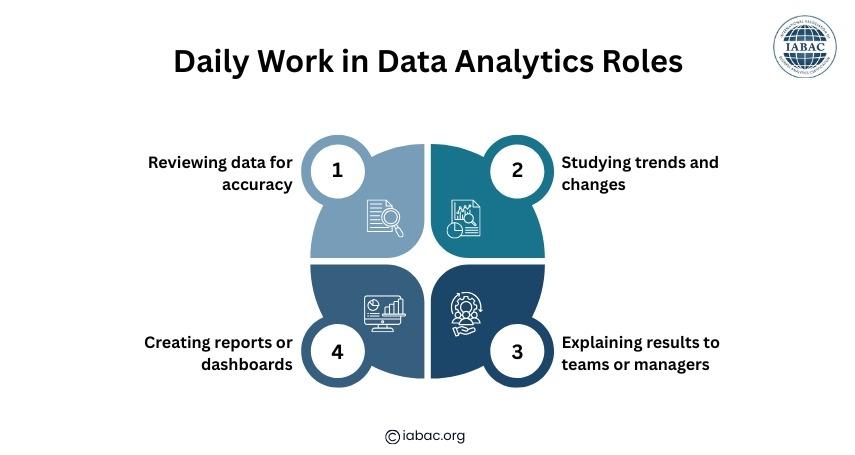
Analytics professionals support decisions rather than work in isolation. Their daily tasks often include:
-
Reviewing data for accuracy
-
Creating reports or dashboards
-
Studying trends and changes
-
Explaining results to teams or managers
This mix of analysis and communication keeps the role engaging and relevant.
Career Paths Linked to Data Analytics
Data analytics opens multiple career paths rather than one fixed role.
Common positions include:
-
Data analyst
-
Business analyst
-
Reporting or insights specialist
-
Operations or planning analyst
With experience, many professionals move into strategy, management, or advisory positions without leaving the analytics foundation.
Learning Without Leaving Your Field
One reason Data Analytics Courses in Jordan attract interest is flexibility. Learners can add analytics skills to their current profession.
Examples include:
-
Marketing professionals studying customer trends
-
Finance teams reviewing costs and revenue patterns
-
Supply chain staff tracking delivery and inventory data
This cross-functional use increases career security and relevance.
Local and Global Career Relevance
Analytics skills support both local and international opportunities. Many organisations value professionals who can analyse and explain data clearly.
For learners in Jordan, analytics skills can:
-
Support roles in local organizations
-
Enable collaboration with regional teams
-
Prepare professionals for global or remote work environments
This flexibility adds to long-term career confidence.
Building Trust Through Data
Organisations depend on people who support ideas with evidence. Analytics professionals help reduce guesswork and improve confidence.
Trust grows when analysts:
-
Use clear visuals instead of complex tables
-
Explain results in simple terms
-
Connect insights to business goals
Strong communication often matters as much as technical skill.
Certification and Skill Validation
Learning builds ability, while certification adds recognition. Certifications help employers understand skill levels and commitment to standards.
A professional certification platform like IABAC supports learners by validating analytics knowledge through structured Data Analytics certifications and authorised training partners (ATP). This helps professionals present their skills clearly and confidently.
Avoiding Common Learning Mistakes
Some learners struggle because they rush or focus only on tools. Effective learning emphasises understanding.
Good practices include:
-
Building strong basics before advanced topics
-
Practicing with real scenarios
-
Focusing on accuracy and explanation
This approach reduces disappointment and supports constant progress.
Data Ethics and Responsible Use
Working with data brings responsibility. Professionals must handle information carefully.
Analytics learning highlights:
-
Respecting privacy and accuracy
-
Avoiding misleading conclusions
-
Understanding limits of data
Responsible practices strengthen professional trust.
Why Timing Matters
Delaying skill development can make transitions harder later. Analytics rewards early and consistent effort.
Starting sooner helps learners:
-
Build experience gradually
-
Improve confidence through practice
-
Stay competitive as roles change
Skills developed today continue to deliver value over many years.
Data Analytics and Long-Term Income Stability
Income growth depends on relevance. Analytics supports steady progress because demand spans industries.
Professionals with analytics skills often gain:
-
Role flexibility
-
Stronger career options
-
Better long-term planning ability
This stability supports future-focused careers.
Preparing for the Future of Work
Automation handles routine tasks, but human judgement remains vital. Analytics supports decision-making rather than replacing it.
Professionals trained in analytics help:
-
Guide automated systems
-
Interpret complex results
-
Balance data with real-world understanding
This balance keeps analytics roles valuable.
Data analytics courses in Jordan offer more than technical learning. They support clear thinking, adaptability, and long-term career value. Learners who build strong foundations stay prepared for change rather than reacting to it. For those who want to validate their expertise and grow with confidence, structured certification pathways add clarity and recognition. Start your journey today and take a confident step toward a career built on data, clarity, and long-term growth.
Kategorien
Mehr lesen
Have you ever wondered why some websites earn instant trust while others struggle to keep visitors engaged? The secret may lie in Google’s E-E-A-T principles—Experience, Expertise, Authoritativeness, and Trustworthiness. In today’s digital landscape, understanding and applying these principles is essential for content creators, marketers, and businesses striving to build a...

In today’s digital-first era, businesses no longer thrive only on traditional marketing. Whether you are a startup, a mid-scale company, or a large enterprise, your online presence defines how customers perceive your brand. But here’s the question: how do you make your business stand out in a highly competitive market like Chandigarh? The answer lies in choosing the right partner...

Objective: In this lesson, we will introduce the basic structure of an HTML document. You will learn how to create a simple HTML file, understand its different parts, and view it in a web browser. We will also explore how to use comments in HTML. 1. Basic Structure of an HTML Document An HTML document consists of a few important elements that define the structure and content of the web...

In today’s fast-moving digital world, one thing is certain—content is the heartbeat of every online strategy. From websites to social media platforms, businesses are constantly trying to capture attention, tell their stories, and build connections with audiences. But why do we keep hearing the phrase, “Content is King”? The answer is simple: without content, there is no...
In today’s competitive digital landscape, having a solid SEO strategy is crucial for increasing website visibility and driving organic traffic. One of the most effective techniques to enhance your SEO efforts is implementing topic clusters. This strategy can significantly improve how search engines like Google understand your content, allowing you to rank higher for a variety of related...